


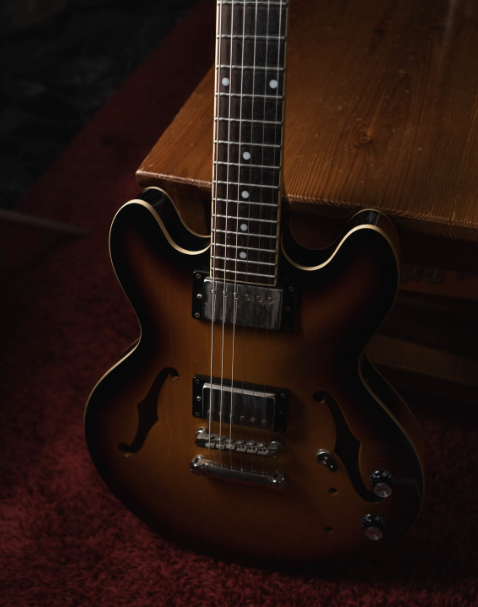
Blog Overview: Voice leading is one of the most valuable skills a jazz guitarist can learn, yet it is often overlooked. This blog explains what voice leading is, why it matters, and how it helps create smoother chord progressions and richer harmony. You'll also learn simple ways to practice it and build stronger musical skills with confidence.
Sometimes the smallest movement creates the biggest musical impact. While many guitar players focus on learning new chords or playing faster solos, great jazz musicians also pay attention to how one chord moves into the next. Those smooth transitions give music a natural flow and make even simple progressions sound rich and expressive.
Bloom School of Jazz teaches that great jazz guitar is about more than playing the right chords. It is about hearing how each note flows into the next. Voice leading helps students build those natural connections and bring greater expression to their music.
What Does Voice Leading Mean?
Voice leading is the way individual notes move from one chord to another. Instead of thinking about chords as separate blocks, you think about how each note can move in the smoothest way possible.
For example, imagine playing one chord and then moving to the next. You could shift every finger to a completely new position. Or you could keep some notes the same and move only one or two fingers. The second approach creates a softer, more connected sound.
Good voice leading helps music flow naturally instead of feeling jumpy or disconnected.
Why Is Voice Leading Important in Jazz?
Jazz is full of rich chords and changing harmonies. If every chord change requires large hand movements, the music can sound rough and uneven. Voice leading keeps those changes smooth. Small movements between chords make progressions easier to play and more pleasant to hear.
It also helps guitarists support other musicians. In a jazz group, every instrument has its own role. Smooth chord changes allow the melody and rhythm section to work together without competing for attention.
Start by Looking for Common Notes
One of the easiest ways to practice voice leading is by finding notes that stay the same between two chords. Many chords share one or more notes. Instead of lifting every finger, keep those shared notes in place and move only the ones that need to change.
This simple habit makes transitions cleaner and helps your hands move more efficiently around the guitar. Over time, your ears begin to recognize these smooth connections as well.
Move by the Shortest Distance
When a note needs to change, try moving it by the smallest amount possible. Instead of jumping several frets, see if you can move just one or two frets. Even small movements create a more connected sound.
This approach also helps your fingers stay relaxed. Less movement means better control, especially during faster chord progressions. Many experienced jazz guitarists rely on this principle throughout an entire performance.
Listen Carefully to Every Chord Change
Voice leading is not only about finger placement. It is also about listening.
Play two chords slowly and pay attention to how they sound together. Does the change feel smooth? Does one note stand out too much? Could a smaller movement create a better result?
Training your ears is just as important as training your hands. The more carefully you listen, the easier it becomes to hear the difference between a rough transition and a smooth one.
Practice Slowly Before Increasing Speed
Many students try to play chord progressions too quickly. This often leads to unnecessary movement and missed notes. Instead, practice slowly. Give yourself enough time to notice where each finger moves. Focus on making every transition clean before increasing your speed.
Slow practice builds strong habits that stay with you as your playing becomes more advanced. A few careful repetitions usually produce better results than rushing through many practice sessions.
Voice Leading Improves Improvisation Too
Voice leading is often linked with chord playing, but it also helps during improvisation.
When you understand how chords connect, it becomes easier to create melodies that fit naturally over those changes. Your solos begin to sound more connected because your note choices follow the harmony instead of fighting against it.
This creates a stronger musical conversation between chords and melody.
Build Strong Musical Habits from the Beginning
Voice leading is one of those skills that can transform the way you play jazz guitar. As you begin to hear how chords connect, your playing becomes smoother, more expressive, and more confident.
That's the approach we believe in at Bloom School of Jazz. We don't just teach chord shapes. We help students understand how harmony works, so every lesson builds lasting musical skills. If you're looking for the best jazz classes Chicago IL, learning these fundamentals can help you grow as a well-rounded musician.
With regular practice and careful listening, voice leading becomes second nature, allowing every chord progression to flow naturally and every performance to sound richer, more connected, and full of musical expression.
Got Questions?
1. Why is voice leading important for jazz guitar players?
Voice leading creates smoother chord changes, improves harmony, and helps your playing sound more natural. It also supports better improvisation and musical expression.
2. Is voice leading difficult for beginners to learn?
No. Beginners can start with simple chord progressions and small note movements. With regular practice, voice leading becomes easier and more natural over time.
3. How can I practice voice leading on jazz guitar?
Practice common chord progressions slowly, keep shared notes in place, and move other notes by the shortest distance while listening carefully to each change.
4. How does voice leading help me become a better jazz guitarist?
It strengthens your understanding of harmony, improves musical flow, and helps you create smoother chord progressions and more expressive performances.
5. Why should I learn jazz guitar with professional guidance?
Structured lessons help you understand harmony, technique, rhythm, and voice leading step by step, making it easier to build lasting musical skills and confidence.

