

Quick Overview: This blog explores whether anyone can learn jazz and clears the myth around talent being the main factor. It explains how listening, practice, and guidance matter more than speed or perfection. Through simple ideas, it shows how jazz becomes easier with time. It also highlights how structured learning and steady habits help beginners build real musical understanding.
Let’s start with something many people quietly wonder but rarely say out loud: “Is jazz only for naturally gifted musicians?” It’s a fair question.
Jazz can sound fast, complex, and almost untouchable at first. But once you spend real time with it, something surprising becomes clear. Most people don’t struggle because they “can’t do jazz.” They struggle because they don’t know how to start hearing it.
Even in the Bloom School of Jazz, offering professional jazz classes Chicago, we notice the same thing again and again. Students don’t fail because of ability. They get stuck because they try to play before they truly listen.
Let’s slow it down and see it clearly.
You Don’t Start With Skill, You Start With Curiosity
If there is one truth about jazz, it is this: nobody starts ready.
Every player begins with small steps. Maybe it is a simple melody. Maybe it is just listening to a record and trying to understand what is happening.
That is enough.
Jazz grows from curiosity, not perfection. The players who improve are not the ones who start “good.” They are the ones who stay interested long enough to figure things out.
And that changes everything.
Why Jazz Feels Confusing At The Beginning
To be honest, Jazz can feel messy at first. Too many notes. Too many changes. Too many things happening at once. And most beginners make the same mistake. They try to control everything immediately.
But jazz does not work that way. It becomes clearer only when the ears slow down. When listening becomes more important than reacting.
Once that shift happens, the confusion starts to fade.
The Moment Things Start Making Sense
There is a small turning point every learner experiences.
At first, the focus is on what to play. Later, it becomes what is happening around the music. That shift is huge.
Suddenly, timing feels easier. Notes feel less forced. Even silence starts to make sense. It is not about adding more effort. It is about paying attention in a different way.
Practice Works Best When It Feels Simple
A lot of people think jazz requires long, intense practice sessions. But real progress often comes from small, focused habits.
Playing slowly. Repeating simple ideas. Listening carefully to each sound instead of rushing through it. That is where control builds quietly.
Over time, even short practice sessions start to feel powerful.
Playing With Others Changes Everything
At some point, playing alone is not enough. Jazz is meant to be shared.
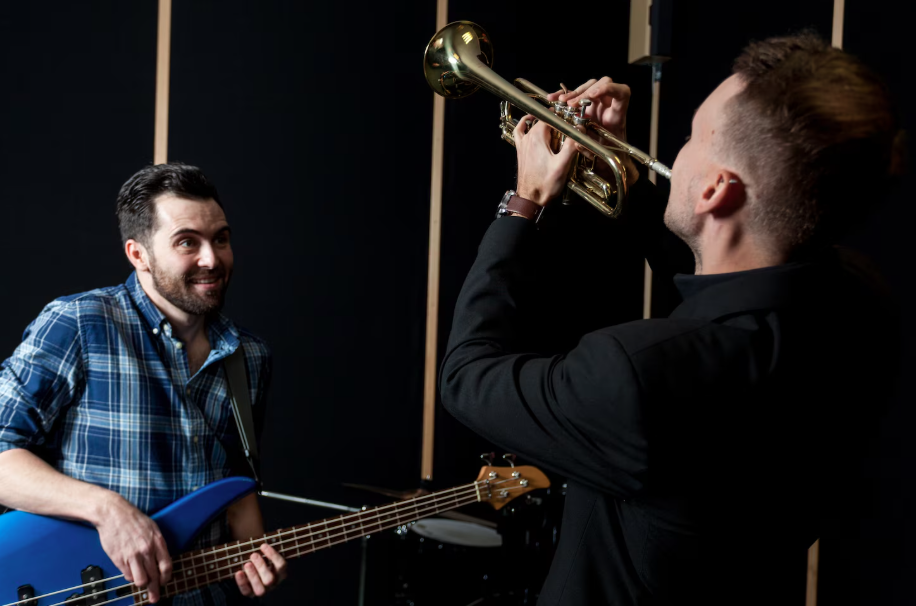
When you play with others, something shifts right away. You can’t depend only on your own timing or ideas anymore. You start to listen more closely. You adjust in real time. You react instead of planning everything in advance.
That is where real learning begins to grow, in those small moments of connection and response.
Mistakes Are Not The Problem
Here is something important: mistakes are normal.
Every jazz player misses notes, loses timing, or gets lost in chords at some point. That is not failure. That is part of learning.
The key is not avoiding mistakes. The key is noticing what they are telling you. Each mistake shows where attention is needed next.
So, Can Anyone Learn Jazz?
Yes. But not in the way people usually expect. It is not about being naturally gifted. It is about staying open to learning.
Jazz asks for patience. It asks for listening. It asks for small, steady improvement over time. And when those things are present, progress always happens.
Not fast. Not perfect. But real.
Why Learning Feels Smoother At Bloom School Of Jazz
Bloom School of Jazz focuses on learning that builds step by step, without pressure or confusion. Instead of rushing into complex ideas, students move through listening, real playing, and steady feedback that helps everything make sense over time.
The focus is not just on playing music, but on understanding how it works. Lessons are shaped around individual pace, so progress feels stable and easy to follow.
As students spend more time with this approach, they begin to respond to music more naturally. Thinking in sound becomes more important than memorizing patterns, and playing starts to feel more connected and real.
Closing Note
If there is one idea to keep in mind, it is this — jazz grows from attention, not speed.
When listening becomes stronger, the way music is felt and understood starts to change. Playing becomes less forced. Ideas feel clearer. There is more space to think inside the sound instead of rushing through it.
For those ready to take the next step, Bloom School of Jazz offers a structured and supportive place to grow. The learning is guided, personal, and built around listening-first development, helping musicians improve how they hear as much as how they play.
To explore lessons or get started, you can reach out anytime:
- Address: 226 South Wabash, 7th Floor, Chicago, IL 60604
- Phone: 773-860-8300
- Contact through website: https://www.bloomschoolofjazz.com/contact-us
FAQs
1. Can anyone really learn jazz, or is it only for talented musicians?
Yes, anyone can learn jazz. It is not about natural talent alone. It is more about listening, practice, and steady improvement over time.
2. How long does it take to learn jazz?
There is no fixed timeline. Progress depends on practice habits, listening skills, and consistency. Even small daily practice can bring noticeable improvement.
3. Are jazz classes good for beginners?
Yes. Structured jazz classes in Chicago help beginners understand basics like rhythm, harmony, and improvisation in a simple and guided way.
4. How can I learn jazz Chicago in a structured way?
Many learners choose guided programs like those from Bloom School of Jazz, where lessons focus on listening, timing, improvisation, and step-by-step musical growth.
5. What skills improve most when learning jazz?
Listening skills, timing, creativity, and musical confidence improve the most. Over time, players also develop better control and expression.

